- So What Even Is Otoshi?
- Where You'll Run Into It
- What's Actually on That Plate?
- The Unspoken Rules
- Why Does This Even Exist?
- How to Handle It Like a Pro
- The Bottom Line
- FAQ
- Is otoshi mandatory?
- How much does otoshi usually cost?
- Do I have to pay otoshi even if I don't eat it?
- Can I ask the staff to skip the otoshi?
- Is otoshi the same as a tip?
- What's the difference between otoshi and tsukidashi?
- Does every izakaya charge otoshi?
- Do I have to pay otoshi if I'm only having one drink and leaving?
- Is otoshi only a dinner thing?
- What kind of food is otoshi usually?
- Can I choose my otoshi?
- Is otoshi listed on the menu?
- Do bars in Japan charge otoshi too?
- What if I have food allergies?
- Is otoshi a recent thing?
It’s your first trip to Japan and you just sat down at an izakaya in Tokyo. The lanterns are glowing outside, the place smells like grilled skewers and soy sauce, and you’ve just ordered a cold beer. Life is good. Then it happens. A small dish lands on your table. Simmered taro root, or maybe a mound of pickled seaweed. Something you definitely did not ask for.
You glance at your friend. Your friend glances at you. Neither of you ordered this. Is this gonna be added to your bill? (It will) Or maybe it’s like the Korean side dishes?
Before you flag down the server and break out Google Translate, let me stop you. That little plate is called otoshi (oh-toe-shee), and no, it’s not a mistake. It’s not a free amuse-bouche either. Welcome to your first izakaya rite of passage.
So What Even Is Otoshi?
In the simplest terms, otoshi is a cover charge dressed up as a tiny appetizer. You didn’t order it, but you’re going to pay for it. Usually somewhere between ¥300 and ¥800 per person.
If that sounds a little pushy, think of it like this. Italy has coperto. Parts of Europe bring you a bread basket you didn’t ask for. Mexico gives you chips and salsa the second you sit down. The difference here is that in Japan, they’re not pretending it’s complimentary. They just assume you know the deal.
The word itself comes from a verb meaning “to pass through” or “to guide.” The idea is that this little bite ushers you into the meal, giving the kitchen time to prep your actual order while you have something to snack on. Poetic, right? Certainly cooler than a bread basket I’d say.
Where You’ll Run Into It
Where is this gonna happen? Mostly izakayas. Those casual Japanese pubs with the paper lanterns, the laminated menus covered in photos, the groups of coworkers loosening their ties over highballs. If the vibe is “drinking with small shared plates,” expect otoshi.
You’ll also see it at some standalone bars, especially the standing-only joints called tachinomi. Fancy cocktail bars that charge a seat fee will sometimes slide you a tiny snack along with it. Same spirit, different name.
Basically, if you’re in a drinking establishment and something shows up without anyone asking, you now know what’s going on.
What’s Actually on That Plate?
This is where it gets fun. Otoshi can be almost anything, there’s no set rules.
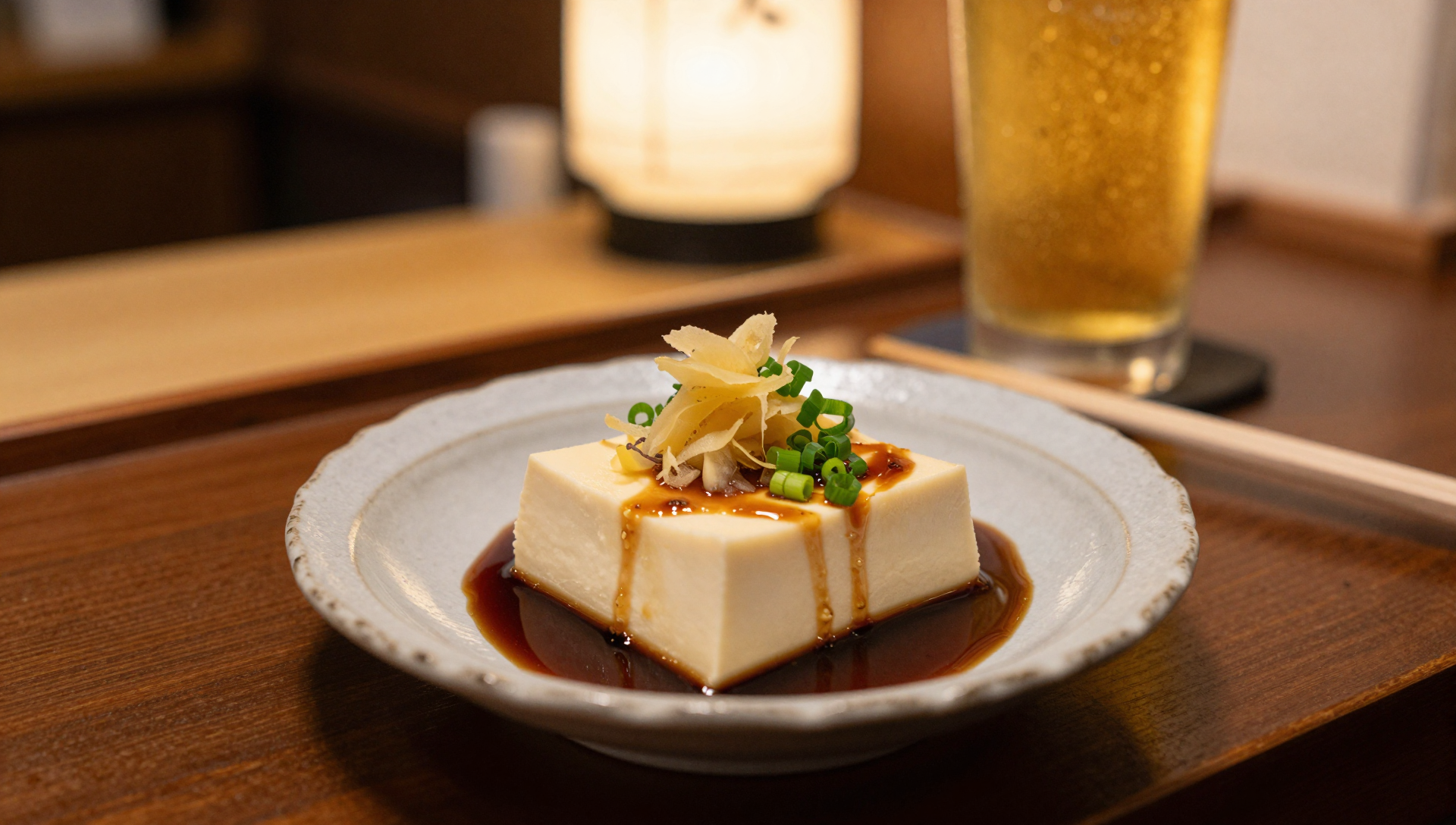
Sometimes it’s incredible. A silky square of chilled tofu with a pool of dashi and grated ginger. A perfect little mound of potato salad with smoked mentaiko folded through it. Three slices of braised pork belly so tender you’ll consider ordering a full portion.
Sometimes it’s much less less thrilling. A wedge of raw cabbage with a dab of miso. A few cold edamame still a little icy in the center. A single piece of tamagoyaki that’s clearly been sitting around. Suddenly the bread basket seems comparable at that point…
The point is, it changes constantly. It’s seasonal, regional, and entirely up to the chef. You might get something that reflects what the kitchen is proud of. You might get something that just needs to be used up. Either way, it’s a tiny indicator into how the place operates. If you pay attention you’ll know how nice or casual a shop is by that alone.
The Unspoken Rules
Here’s what you need to know so you don’t accidentally make things awkward.
- You can’t refuse it: This one is non-negotiable. The otoshi is part of the deal when you sit down. Trying to send it back won’t get your money refunded. It’ll just make you look confused at best and confrontational at worst.
- It’s not a tip: Tipping doesn’t exist in Japan the way it does elsewhere. This is separate. Think of it as the price of renting that seat for the evening.
- You can ask how much it is: Most places have the otoshi charge listed on the menu somewhere, often in small print near the bottom, similar to how a mandatory tip is sometimes added for large groups in America. If you’re really curious, you can ask before sitting down. Nobody will be offended. But honestly, most people (as should you) just accept it as part of the experience and move on.
- Occasionally they’ll ask: If a place asks “otoshi wa ikaga desu ka?” they’re giving you the option. This is rare, and it usually means the spot is accustomed to tourists. When it happens, you can politely decline. But don’t expect it.
- It’s per person: Yes, everyone at the table gets one. Yes, everyone pays.
Why Does This Even Exist?
Good question. The historical roots go back to the idea that when you arrived at a drinking establishment, the host would offer you something small right away as a gesture of hospitality. It kept you occupied, gave the kitchen some breathing room, and set the tone for what was to come.
Over time, that gesture evolved into a standardized charge. It’s a hospitality thing. It’s a business thing. It’s both, that’s just how it works.
Some people will tell you otoshi is a holdover from a more formal era of Japanese dining and doesn’t really need to exist anymore. Others will defend it as part of the izakaya charm. You can decide where you land after you’ve had a few but like the tipping debate, you’re not gonna change it.
How to Handle It Like a Pro
First, stop worrying. The otoshi is going to arrive and you’re going to pay for it. That’s all there is to it. From there, you can either resent the ¥400 or you can accept it and eat it. I recommend option two.
Here are a few survival tips if you’re gonna be nitpicky.
Check for signs. Some places print “otoshi ¥500” near the entrance or on the menu. Once you know the characters (お通し), you’ll start spotting it everywhere.
Chain izakaya like Torikizoku often skip it entirely. If you want a predictable bill with no surprise fees, stick to chains. But you’ll miss out on the character of a real neighborhood spot.
If the bill catches you off guard, look for the otoshi line item. It’s usually listed separately. Now you know for next time.
And honestly, sometimes the otoshi is the best thing you’ll eat all night. You’ll get to try things like simmered daikon in yuzu miso that you’ll think about years later. Or you might be unlucky and get cold spaghetti with ketchup. Both experiences are, in their own way, unforgettable.
The Bottom Line
Otoshi isn’t a trick and it’s not a tourist trap. It’s just how izakayas work. You pay a small fee, you get a small dish, and now you’re part of a system that’s been humming along for generations.
Order your drink. Nibble the free-looking snack that isn’t free. Look around at the steam rising from the open kitchen, the clatter of plates, the old guy at the counter nursing his shochu like he’s been here every Thursday since 1987. This is what you came for.
And one day, when you’re back home, you’ll sit down at a bar, order a beer, and find yourself oddly disappointed when nothing unexpected lands in front of you.
FAQ
Is otoshi mandatory?
Yes. If it arrives at your table, you’re paying for it. You can’t send it back and you can’t refuse it. Think of it as part of the seating fee, not an optional appetizer you accidentally ordered.
How much does otoshi usually cost?
Most places charge between ¥300 and ¥800 ($2 to $5) per person. ¥400 to ¥500 is the sweet spot you’ll see most often. Fancier izakaya in neighborhoods like Ginza or Akasaka might push closer to ¥800 or ¥1,000 ($5 to $6). If you’re in a casual local joint, expect the lower end.
Do I have to pay otoshi even if I don’t eat it?
Yes. The charge is for the seat, not for the food itself. Whether you touch it, ignore it, or stare at it resentfully for an hour, the fee stays on your bill.
Can I ask the staff to skip the otoshi?
Generally no, and asking puts the staff in an awkward position. At a small number of tourist-friendly spots, they might offer you the choice when you sit down. If they don’t offer, don’t push it.
Is otoshi the same as a tip?
Not at all. Tipping is not part of Japanese dining culture and can actually cause confusion or offense. Otoshi is a set seating charge that happens to come with a small dish. It serves an entirely different purpose.
What’s the difference between otoshi and tsukidashi?
Same idea, different word. Otoshi (お通し) is more common in the Kanto region around Tokyo. Tsukidashi (突き出し) is the Kansai term used around Osaka and Kyoto. The practice is basically identical, though some argue tsukidashi tends to be slightly more elaborate. Don’t overthink this one, you get what you get anyway.
Does every izakaya charge otoshi?
No. Large chain izakaya, like Torikizoku or Watami, typically don’t charge otoshi. Smaller independently run spots almost always do. If you’re budget conscious and want zero surprises, chains are the safest bet. If you want atmosphere and a more authentic experience, you’ll likely encounter otoshi.
Do I have to pay otoshi if I’m only having one drink and leaving?
Yes. The charge kicks in the moment you sit down, no matter how short your stay is. If you’re just popping in for a quick beer, the otoshi might end up costing more than the drink itself. Something to keep in mind.
Is otoshi only a dinner thing?
Mostly, yes. Izakaya primarily operate in the evening. Lunchtime at the same establishment usually won’t include otoshi. Some afternoon drinking spots might still charge it, but evening is when you should expect it.
What kind of food is otoshi usually?
It varies wildly. Common options include chilled tofu, potato salad, pickled vegetables, simmered fish or meat, tamagoyaki (rolled omelet), edamame, seaweed salad, or small portions of whatever the kitchen is featuring that day. It tends to be something that holds well and can be prepped in advance.
Can I choose my otoshi?
Almost never. It’s selected by the chef and the same thing usually goes out to every table that night. Occasionally a server might describe a couple of options, but don’t count on it.
Is otoshi listed on the menu?
Sometimes. Look near the bottom of the menu or on a small sign by the entrance. You might see “お通し ¥400” or something similar. If it’s not listed, it’ll definitely show up as a line item on your final bill.
Do bars in Japan charge otoshi too?
Some do, some don’t. Standing bars (tachinomi) tend to charge a small otoshi. Upscale cocktail bars often include a seat charge that might come with a tiny snack, though they may call it something different like chakudai or seki-ryo. Dive bars and casual standing beer spots might skip it entirely.
What if I have food allergies?
Mention your allergies when you sit down. The staff may be able to adjust the otoshi, though there’s no guarantee. For serious allergies, it’s worth learning the Japanese phrases you’ll need and having them ready before the dish arrives.
Is otoshi a recent thing?
Not at all. The practice has roots going back centuries in Japanese drinking culture. It evolved from a genuine hospitality gesture into the standardized seating charge you see today. You’re participating in something with serious history, which is a nicer way to think about it while you pay that extra ¥500.


[…] – Boiled and salted soybeans, usually served complimentary as an otoshi (appetizer) with the beer (don’t eat the […]